


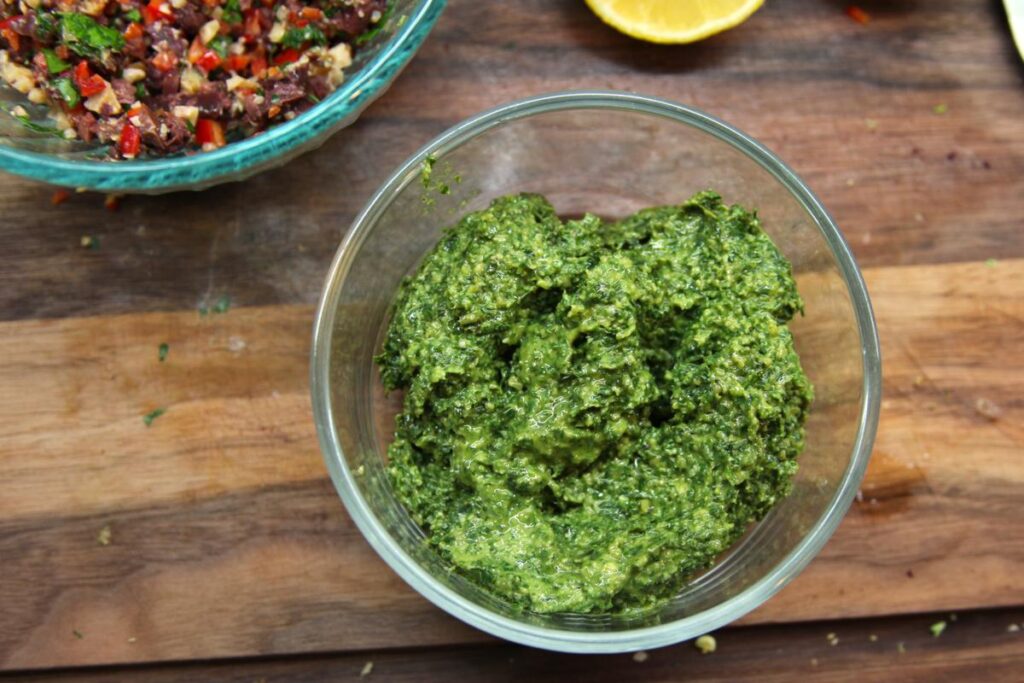
I love this pesto recipe. It’s quick, easy, and delicious! The most time consuming part of the recipe is plucking the leaves off of the basil. I think it would be wonderful if basil was sold pre-plucked like lettuce. Imagine the amounts of pesto we’d all be eating.
I’ve been making this pesto since I was a kid. The base for this recipe is actually from a cookbook for backpackers and I have many memories of eating polenta with a huge dollop of pesto after a long day of hiking in the backcountry. It’s excellent pesto, and I use it for all my pesto needs, even when I’m not preparing for a camping trip. What makes it particularly lovely is that it’s fairly stable at room temperature for several days, just in case you do want to take it backpacking.
If you’ve never made your own pesto, I highly recommend it. The flavors are fresh and punchy in a way that they just aren’t in pesto from a jar. As someone with Celiac disease, there’s the added benefit of knowing for sure that none of your equipment was contaminated with gluten. All of which is to say that this recipe is well worth the basil-plucking!
This recipe contains affiliate links. When you purchase the products from these links I receive a small commission at no extra cost to you which helps to support this blog.
Required Equipment
- Blender or food processor with at least a 2 cup capacity
I’m aware that traditional pesto is made with a mortar and pestle (hence the name – pesta is “to pound”) and if you’d like to grind your pesto by hand, be my guest. For most everyone else, you’ll want a food processor or blender. I’m already notorious for eating late dinners, it’s hard to imagine how late we’d be eating if I hand-ground my pesto.
Purchasing Celiac-safe Nuts
One of the difficult thing about having Celiac disease is that many food items that don’t contain gluten are processed in facilities that also process gluten, making them unsafe for consumption by those with Celiac. This makes nuts, in particular, very challenging.
When I’m looking for nuts in a generic supermarket, I look for KIND brand, which (at time of writing) are processed in a gluten-free facility. Don’t take my word for it, always double check. Regulations are being changed rapidly in the US right now, who knows what may be true in several years.
I have also found that higher-end supermarkets tend to have more safe options, although this isn’t always true. I was recently flummoxed at a Whole Foods when I couldn’t locate any safe peanuts.
Finally, there’s always the option of buying them in bulk online. I favor Anthony’s Goods as well as Yupik from Amazon. For this recipe, I’m using these cashews. If pine nuts are more your speed, here are some gluten free ones from Yupik.
Substitutions
You can make this recipe with any kind of nuts you want. My favorites are pine nuts (classic) and cashews, but any other type of nut will work. Walnuts are popular and I’ve heard that macadamia nuts make a decadent pesto.
If you are looking to make this recipe without dairy, you can omit the butter and use a vegan butter, refined (flavorless) coconut oil, or more olive oil. This may change the consistency of the final product, so be conservative in your additions of olive oil and then adjust the consistency to your liking.
Detailed Method
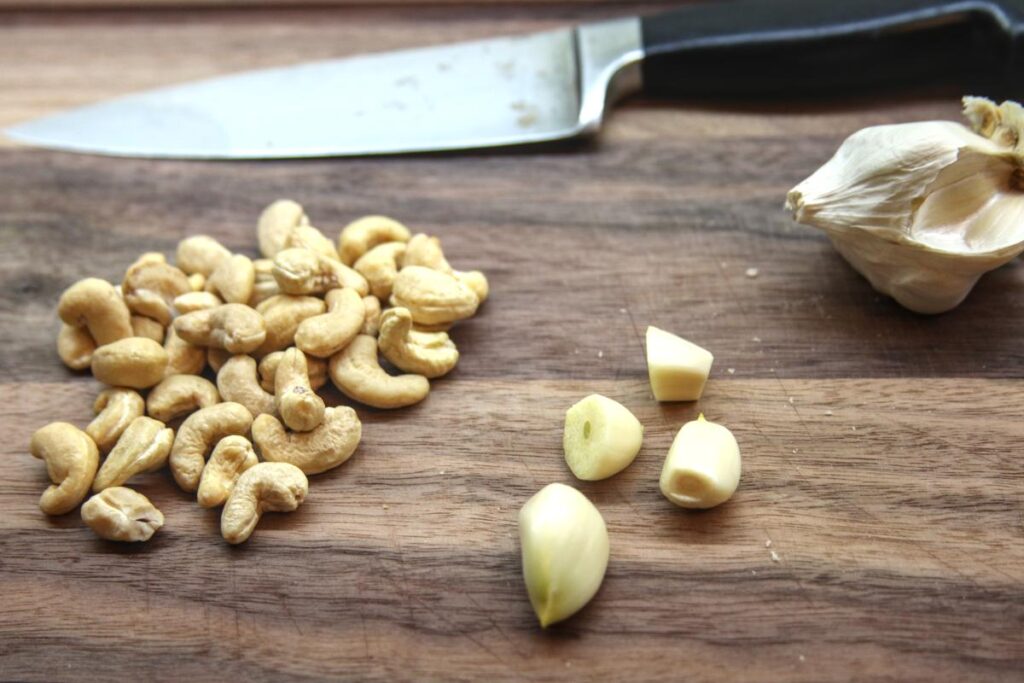
Peel your garlic, grate your cheese, pluck and wash your basil, and measure out your nuts.
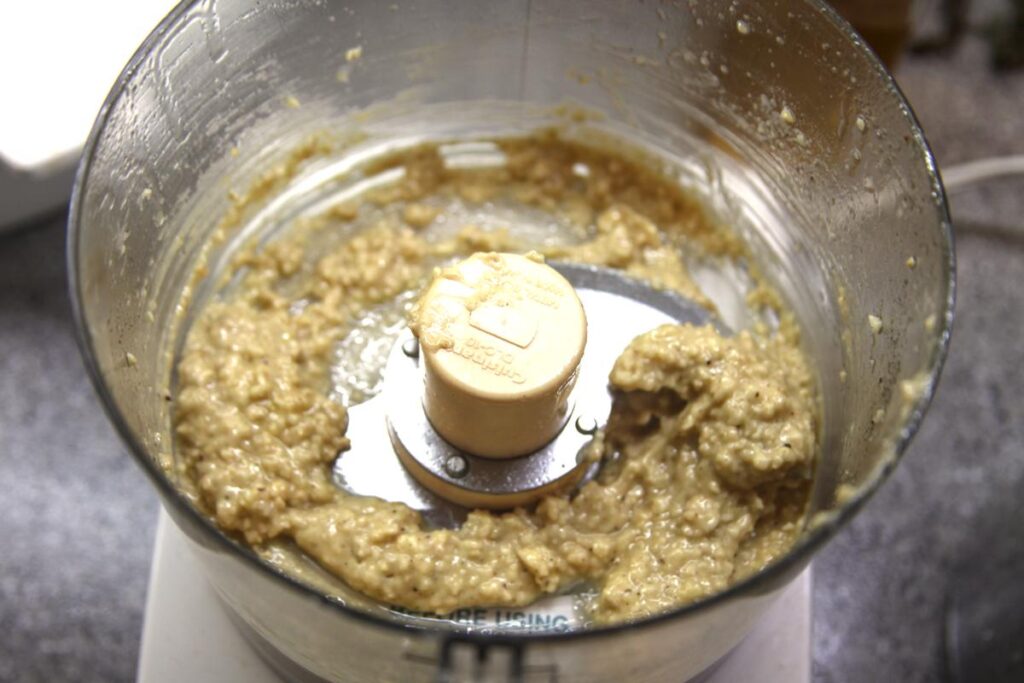
Make the base of your pesto – blend the nuts, garlic, butter, salt, and pepper with several tablespoons of the olive oil until it forms a rough paste. There may be small chunks of nut, but this isn’t an issue.
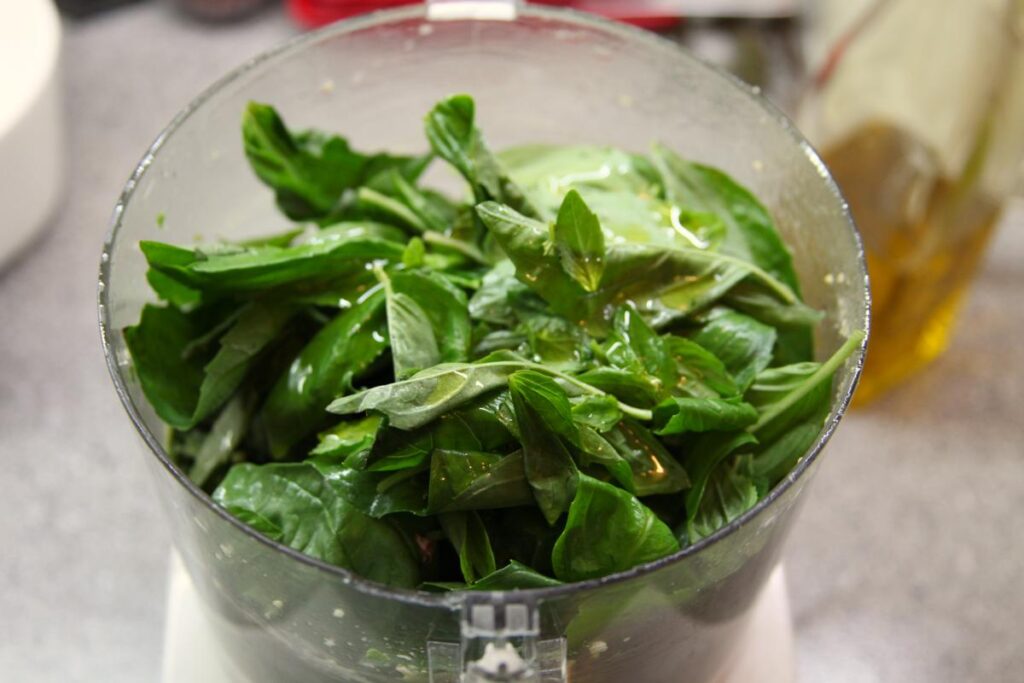
Add the basil leaves to the food processor along with almost all of the rest of the olive oil.
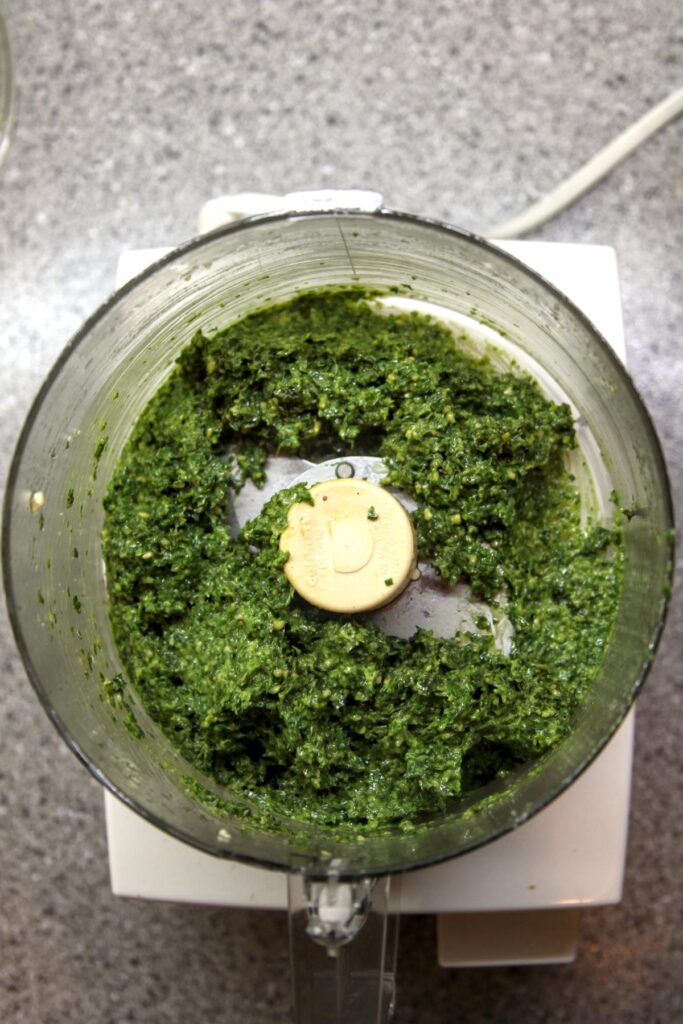
Blend until a thick paste forms. Give the pesto a stir and add more olive oil if you want a thinner consistency. Blend again, briefly.
Add the parmesan and the romano, if using, and blend very briefly, just until the cheese is mixed in to the pesto.
Enjoy!
Storage
Store in fridge (preferably) or at room temperature for several days.
Note: the color of the pesto will darken due to oxidation, this is not a mark of spoilage.
Homemade Pesto
This basil pesto recipe is quick, easy, and delicious! The most time consuming part of the recipe is plucking the leaves off of the basil. The flavors are fresh and punchy in a way that they just aren't in pesto from a jar. This recipe is well worth the basil-plucking!
Makes roughly 1 cup pesto.

Ingredients
Instructions
-
Blend 2 tbsp olive oil, nuts, garlic, salt, pepper, and butter in food processor until evenly blended.
-
Add basil and almost all of the remaining olive oil and blend until smooth. Assess texture and add more olive oil if desired.
-
Add cheeses and blend briefly until combined.
Note
Store in fridge (preferably) or at room temperature for several days.
The color of the pesto will darken due to oxidation, this is not a mark of spoilage.